
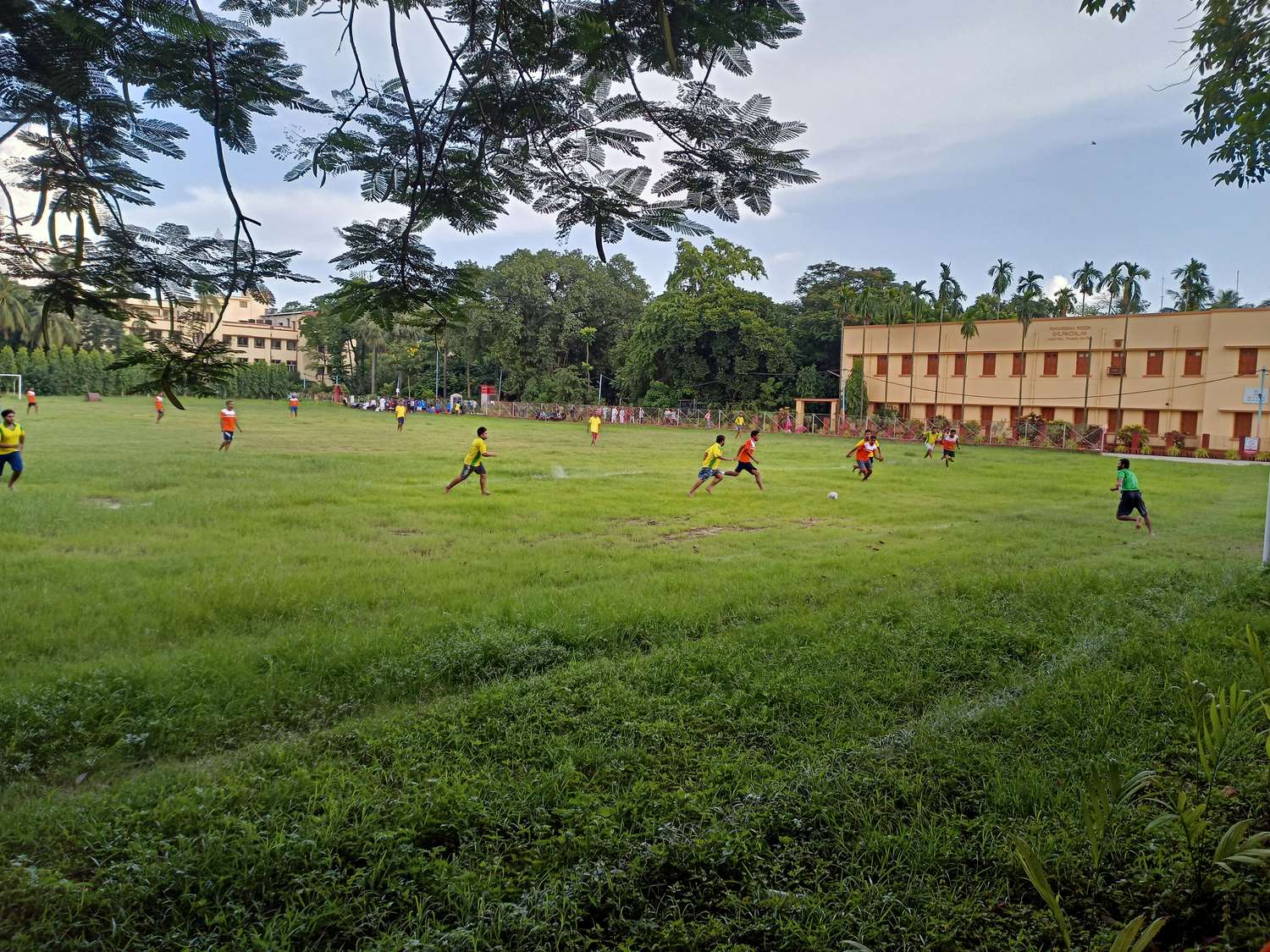
Image: Wikimedia Commons — "An ongoing football match of students in West Bengal, India.jpg" by Yogabrata Chakraborty / Billjones94 (CC BY-SA 4.0) — https://commons.wikimedia.org/wiki/File:An_ongoing_football_match_of_students_in_West_Bengal,_India.jpg
How to spot fake or paid football trial scams in India
By Gulshan Mehta · Updated Oct 14, 2026
If you are a parent of a young footballer in India, you have probably seen the messages: a WhatsApp poster promising “guaranteed selection”, a “European scout” who will be in your city this weekend, or a stranger asking for a UPI payment before they will “put your child’s name on the list”. Some of those messages point to real events. Many do not.
This is a practical check to run before anyone pays. It does not replace the official page for a trial.
Red flags
One red flag is enough to slow down. Two or more means do not pay until you can open an official page that matches the claim.
- Fees for “guaranteed selection”. A legitimate trial evaluates players. It does not sell a place in a club. India Khelo Football (IKF) states that it does not sell selection or promise club entry, and that clubs make final decisions on merit. IKF’s fraud warning says that anyone who promises selection, guaranteed club entry, or special access in IKF’s name in exchange for money is committing fraud. Treat the same claim from any other “agent” or “scout” the same way.
- Unverifiable agents. Be wary of people who will only talk on WhatsApp, will not give a full name and organisation, and ask you to pay a “processing fee” or “scout fee” to a personal UPI ID. A real club, state association, or platform publishes the trial on its own site or verified social account. If you cannot find the person or the event outside the chat, do not pay.
- Foreign-trial promises. Posters that say “pay now, trial in Europe next month, visa arranged” are a common hook. Real overseas camps and academy programmes publish dates, venues, age groups and fees on the club or academy’s own website. If the only “proof” is a designed poster and a payment request, treat it as unverified. Paying a stranger does not create a visa, a trial slot, or a European club offer.
- Pay-to-play “selection camps”. Paid camps exist. Holiday camps and academy clinics charge a published fee for coaching days. That is not automatically a scam. The scam is dressing a paid camp up as a “selection” that leads to a contract, or collecting a second “selection fee” after the camp. If someone calls it a selection but will not show you the official club or association page, treat it as a commercial camp at best — and a fraud risk at worst.
- No official club or organiser page. If you cannot find the same dates, venue and fee on the club’s official website, a verified social account, the All India Football Federation (AIFF) site, a state football association site, or IKF’s official site, the listing is not verified. A PDF in a parents’ group is not an official page.
How to verify a trial
Work from official pages you opened yourself.
- Start with the organiser’s official site or social accounts. Type the club or academy name into your browser. Do not rely only on the link in the forward. Check that the dates, venue, age group and fee match.
- Check AIFF or the state football association. State-team and national championship selections are announced by AIFF or by the member state association. AIFF’s official site is the-aiff.com. AIFF also publishes a list of state associations. If someone claims a “state team trial” or “AIFF selection” that does not appear on those official channels, treat it as unverified.
- Check IKF only on IKF’s own site. IKF city trials and Project IKF Naari Shakti (girls’ trials) are published on IKF’s official website, including the Season 6 page and the trial calendar. IKF is a trial platform, not a club. Dates and fees should match what IKF itself publishes. A forwarded poster that uses IKF’s name but is not on IKF’s site is a warning sign.
What a legitimate fee looks like
Registration fees exist. A published fee is not, by itself, a scam. The test is whether the fee is stated on the official page before anyone asks you to pay, and whether anyone is charging extra “for selection”.
IKF is a useful example because it publishes the numbers. On its Season 6 page and terms, IKF states a one-time city-trial registration fee of ₹125 inclusive of GST for boys. Girls participate free of cost. Boys from economically underprivileged backgrounds can also participate free if they show a valid government-issued document (BPL/Antyodaya card, income certificate, or EWS certificate). IKF says zonal and national rounds are free for selected players. IKF also says it does not charge players for being scouted or connected to a club beyond that one-time city-round fee, and that anyone asking for extra payment in IKF’s name should be reported.
Those figures apply to IKF’s published Season 6 rules. They are not a nationwide price list. Other organisers charge different amounts, or none. Never assume a trial is free unless the official source says so. Never assume a WhatsApp “fee” is official unless you can see it on the organiser’s page.
If the only place a fee appears is a chat message, do not pay. If the official page says one amount and a person at the ground asks for more, do not pay the extra.
What to do if you have been scammed
If you have already paid an unverified person, report it as a cybercrime. Do not send more money “to get a refund”.
- Report the incident on the National Cybercrime Reporting Portal. The portal is run under the Indian Cybercrime Coordination Centre (I4C), Ministry of Home Affairs.
- Call 1930, the National Cybercrime Helpline. I4C states that 1930 runs in all States and Union Territories and is used to report financial cyber fraud so banks can try to hold the money. The Ministry of Home Affairs lists the portal and helpline as part of I4C.
- Keep the UPI ID, account number, screenshots of the chat, the poster, and bank or UPI SMS. You will need them for the report.
- Tell your bank or UPI app as well, using the fraud or dispute options they publish.
- If the person used IKF’s name, also use the contact details published on IKF’s official website so IKF can flag the impersonation.
FAQ
Is a football trial fee always a scam?
No. Some official programmes publish a registration fee. IKF, for example, charges ₹125 inclusive of GST for boys at city trials and states that girls’ participation is free. The scam is an unpublished fee, a fee for “guaranteed selection”, or anyone charging extra in an organiser’s name.
How do I check if an IKF trial is real?
Open IKF’s official site and the trial calendar yourself. Match the city, date and fee. IKF publishes that it does not charge for selection or club placement. Anyone asking for more than the published city-round fee in IKF’s name is, in IKF’s words, fraud.
Someone promised a Europe trial if we pay today. What should we do?
Do not pay. Ask for the club or academy’s official page that lists the same dates and fee. If that page does not exist, treat the offer as unverified.
Where do we report a paid trial scam in India?
File a report at cybercrime.gov.in and call 1930, especially if money has already moved. Keep payment records. The National Cybercrime Reporting Portal and 1930 helpline are published by I4C / the Ministry of Home Affairs.
How can we follow only verified India trials?
Browse the India listings on this site and subscribe for alerts. Every card shows the source we used.
Get verified trial alerts
Subscribe for listings we have checked against an official or credible source. Then browse current India trials.